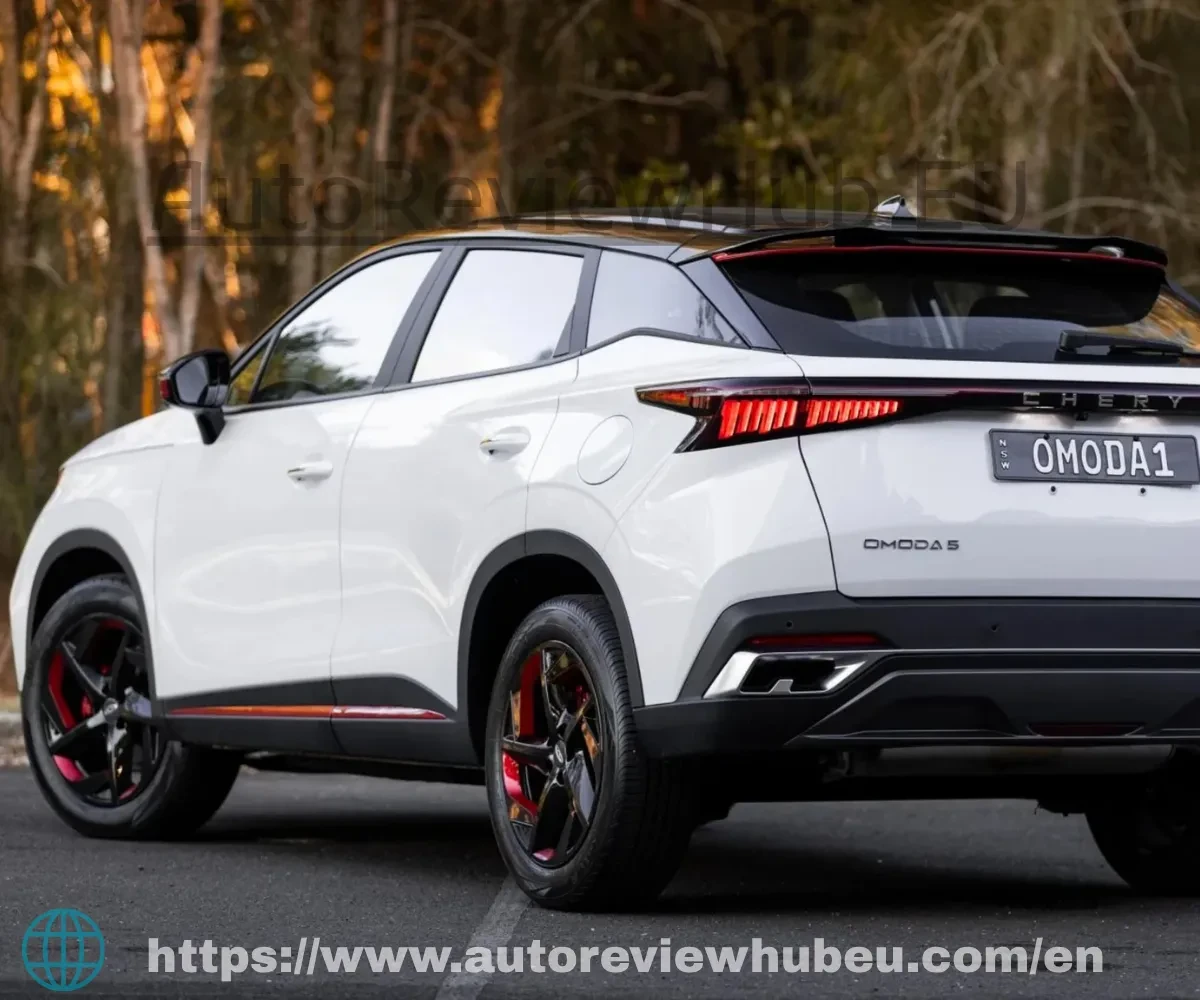
CHERY Omoda 5 2026 — from €26,000. European ownership focus on real running costs, motorway comfort, and daily usability. What matters for buyers across Fran... Our coverage compares EU list pricing, real-world WLTP range, and warranty gaps across Chinese brands sold in Europe. Browse comparisons, full specifications, and independent buyer reviews.
Compare · Categories · Articles · Community Q&A · Sitemap · EU tariffs · CHERY brand
Is the CHERY Omoda 5 worth shortlisting in Europe? Performance angle: The CHERY Omoda 5 2026 enters Europe as an ambitious compact SUV package from CHERY, mixing modern tech, turbo performance potential, and aggressive pricing in a crowded segment. Key figures we’ll reference: a list price from €26,000 — always reconcile with your market and trim. Is the powertrain calibration a strong point of the CHERY Omoda 5? Manufacturer materials list a 1.6L Turbocharged Petrol Engine, approx. 197 hp configuration for the CHERY Omoda 5 2026—match it to trims stocked in your region. The CHERY Omoda 5 tops out at 195 km/h, usable in day-to-day driving, especially when expectations match the segment European driving. In daily use, throttle response at low speeds and overtaking confidence on faster roads matter more than brochure numbers alone. Real EU driving: weather, routes, and urban life Cold-start behaviour and tyre choice affect fuel use and grip in winter; in hot summer touring, A/C load and cruise stability shape real-world comfort. In short: a proper test drive usually settles the debate. In dense European cities—tight parking bays and frequent low-speed manoeuvres—a compact footprint and clear sightlines reduce daily friction; that matters as much as brochure performance for many urban buyers. What do owners say after real mileage? City driving In cities like Paris, Madrid, and Milan, the Omoda 5 feels easy to live with on a daily basis. The steering is light at low speeds, which makes parking and tight urban manoeuvres straightforward. The suspension absorbs broken city surfaces reasonably well, although sharper potholes are still felt inside the cabin. One thing European drivers often mention is that it feels “less heavy than expected” for an SUV of this size, which helps in congested city traffic. Motorway driving On highways in France, Germany, and the UK, the Omoda 5 is stable at legal cruising speeds around 120–130 km/h. The chassis remains composed, but the refinement level clearly reflects its price segment. Wind noise becomes more noticeable above 120 km/h, especially around the mirrors and A-pillars. It’s not uncomfortable, but it is not at the level of Volkswagen or Peugeot SUVs in the same class. Many UK drivers describe it in simple terms: “It’s fine for long drives, but you know you didn’t pay premium money for it.” Mountain / hilly roads On hilly terrain (Austria, Switzerland nearby routes, or southern Italy), the 1.6 turbo engine provides sufficient torque for normal driving, but it is clearly tuned for smoothness rather than aggressive performance. The gearbox prefers early, calm downshifts rather than sporty aggressive responses. When fully loaded, you can feel that the car prioritises comfort over dynamic driving. Road and wind noise Road noise is moderate. On smooth asphalt surfaces (Netherlands, parts of Germany), the cabin remains relatively quiet. However, on rougher surfaces in rural France or Eastern Europe, tyre noise becomes more obvious. This is one of the areas where European buyers directly compare it to Hyundai Kona or Renault Captur. Gearbox feel The 7-speed dual-clutch transmission is responsive in normal driving, but not fully refined in low-speed urban traffic. At crawling speeds, slight hesitation can be felt, especially in stop-and-go conditions. Once the car is moving, gear shifts are smooth and predictable. Maintenance and running costs Running costs are one of the key selling points. The purchase price is significantly lower than most European competitors, and servicing is expected to remain straightforward. However, availability of service points varies widely across Europe — strong in emerging markets like Spain, less dense in countries like Germany and the UK. Known complaints to check Noticeable highway wind noise DCT hesitation in heavy traffic Infotainment learning curve Brand trust still developing in Western Europe Owner feedback trend Early owners across Spain, Italy, and parts of E
Vehicle hub (canonical) · Full editorial article · Review · Specs